In 2020, a global pandemic swept the world and changed billions of lives overnight.
Singapore was not spared. On 7 April 2020, Prime Minister Lee Hsien Loong announced that Singapore would be entering a Circuit Breaker period, to break the chains of COVID-19 transmissions.
Reflecting on the Impact of the Pandemic
The COVID-19 pandemic badly impacted the arts and heritage sector. For example, I was supposed to be a small part of the Singapore Heritage Festival 2020 and was already working closely with the wonderful people at the National Heritage Board.
There’s some background to this.
Other than being a local writer and heritage enthusiast, I was (and am) a member of the Singapore Seah Clan Association. In 2020, the clan association was planning on celebrating its official 70th anniversary.
As part of the festivities, I was working with the National Heritage Board to organise an event. It would have been held at Kallang, at the National Youth Sports Institute.
The idea was that the Singapore Seah Clan Association would have provided some booth programmes and food & beverage possibilities, while I would have given a one-and-a-half hour talk and dialogue on Seah family history. At the time, I had published two family history books on prominent ancestors Seah Eu Chin and Seah Liang Seah, and would share about the two of them, as well as other prominent Seah family members over the years.
Because of the Circuit Breaker, the in-person Singapore Heritage Festival was cancelled and moved online. As a result, I received a call from an officer from the National Heritage Board to ask if we could create a video, on short notice. The alternative was to do a photo essay instead. These were the two practical choices because of COVID-19.
I did want to develop a video, but the Singapore Seah Clan Association was composed largely of seniors and many of them did not have digital skills. I did not have the equipment either. As it was challenging for the clan association or me to develop a video, I wrote and sent in a photo essay instead. It was the best we could do under the circumstances.
My photo essay was called “Grandfather Stories”. I believe it is important to know these grandfather stories, so that we can better understand who we are and where we come from. It is clear that even as they advanced their business interests, the forefathers also gave back to society. More significantly, in a time when many were sojourners, returning home to China after they had made great fortunes, they stayed and built local institutions, like the Ngee Ann Kongsi. There is great value in remembering those who have come before us and having a sense of history. And I believe that those of us who are younger and step up and contribute in whatever field we choose to be in, will in turn, one day inspire future generations.
Publishing and Promoting Books During the Pandemic
I also published My Father’s Kampung: A History of Aukang and Punggol in September 2020, literally in the middle of a worldwide pandemic. The amazing people at World Scientific still managed to deliver a quality product in the middle of the pandemic, even though it was slightly delayed. There were several minor production delays, but did I mention, it was a worldwide pandemic?
To launch the book, I had to hold two book launch talks over Zoom. My first book launch was co-organised with the Montfort Alumni and we arranged the entire event basically over Skype, emails, and WhatsApp. Till today, and this is three years on, I have not met everyone I worked with in person.
The Zoom talk was called “Kopi Talk: Aukang and Montfort, Its Historic Education Hub” and held on 19 September. The second was supported by the Singapore Poetry Festival and called “Kopi Talk: Literary Pioneers of Aukang” and held on 6 December.
Another memory stands out for me. I was awarded a grant by the National Heritage Board. As part of the grant requirements, I needed to send in some copies of my book to the National Heritage Board.
But because COVID-19 had effectively meant that many people were working from home, when I turned up at the National Heritage Board, it was empty.
Other than the security post at the first floor of Stamford Court, which was visibly manned, the National Heritage Board reception area looked closed and empty, and many of the offices did not have people inside.
Only a cleaning lady and some poor public officer happened to be in the building and I persuaded the duo to help me place the books on the grant officer’s table.
I also released a Chinese translation of my original book on Seah Eu Chin. I had worked on it for two years with the kind help of a translator recommended by the Singapore Seah Clan Association. We were thinking that we would time the book launch with the 70th anniversary celebration of the Singapore Seah Clan Association.
But the plan entirely evaporated due to COVID-19.
Instead, I went online with a different group of people. (I guess one has to be flexible when the situation changes drastically.)
When the book was completed, I worked with the Genealogy Society of Singapore (GSS for short) to organise a Zoom talk for their members on 12 December 2020. Because of my heritage hobbies, I knew quite a few people at the GSS, including their President and several of their executive committee members.
Personally, I was very impressed that the President of the GSS and his team members were able to pick up and learn technology quickly, adapting to the situation. I worked with a few translators over email and WhatsApp to prepare my Mandarin speech, and hopefully I did not hurt people’s ears too much over Zoom.
For context, at the time, my home did not have much space. It was around 635 square feet, including the air con ledges. I also did not have any technical equipment except for my laptop and a microphone.
As such, I had to sit on the floor in my living room and speak into the microphone, while staring into the laptop’s in-built camera. It was a far cry from the face-to-face public talks I used to give at museums, schools, and other public venues.
I think part of the charm of attending a public talk is the venue, which often is imbued with meaning, significance, and buzz. For example, I spoke at the Nanyang Sacred Union, a Confucian temple that was once a Seah family member’s home.
I also spoke at Blackbox at Fort Canning Centre during the Singapore Bicentennial in 2019, and Fort Canning Centre was where the Bicentennial Experience was being held.
And I have spoken at the Ixora Room at the Peranakan Museum before, and they have had exhibitions showcasing Seah family forefathers Seah Eu Chin and Seah Liang Seah.
Somehow, staring into a computer screen does not have the same feeling as speaking at a physical venue. But as the situation had changed, so I adapted. Better something than nothing, I guess!
Despite Problems, Maintain Confidence in Our Future
One last point stands out in my mind. I attended an SGTogether public engagement conversation over Zoom (since the pandemic was still raging on) on 27 January 2021, and I was struck by how many others in the heritage and arts spheres were also negatively impacted by COVID-19. This was a shared experience for many in the arts and heritage community.
But there’s one major point I shared there over Zoom that I would like to share here.
Throughout Singapore’s history, we have faced crises and challenges before. And I am sure that in future, there will be new crises and challenges to come. But just as we have overcome crises and challenges in the past, we must have the confidence that we will rise up to the challenge.
To my fellow Singaporeans, I hope we can maintain our confidence and what gives us our inner strength to keep going.
I have to also add that despite all the trials and tribulations, I actually became a finalist for Best Non-Fiction and was among the Top 10 for the Readers’ Choice of the Singapore Book Awards! So I guess I did practise what I preached and I rose to the occasion.
Looking Ahead
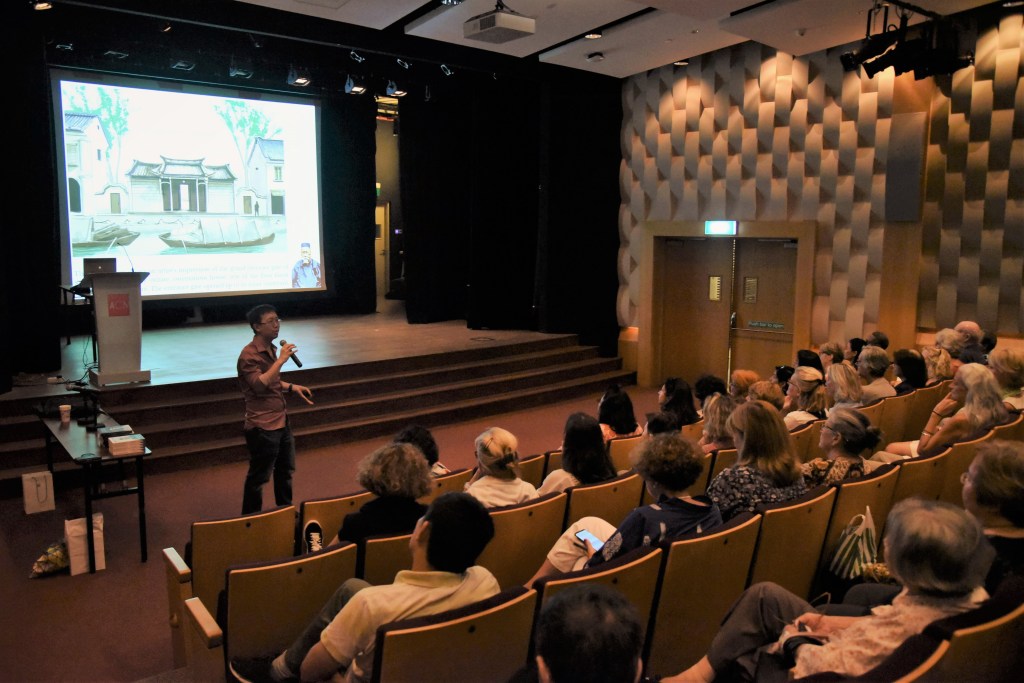
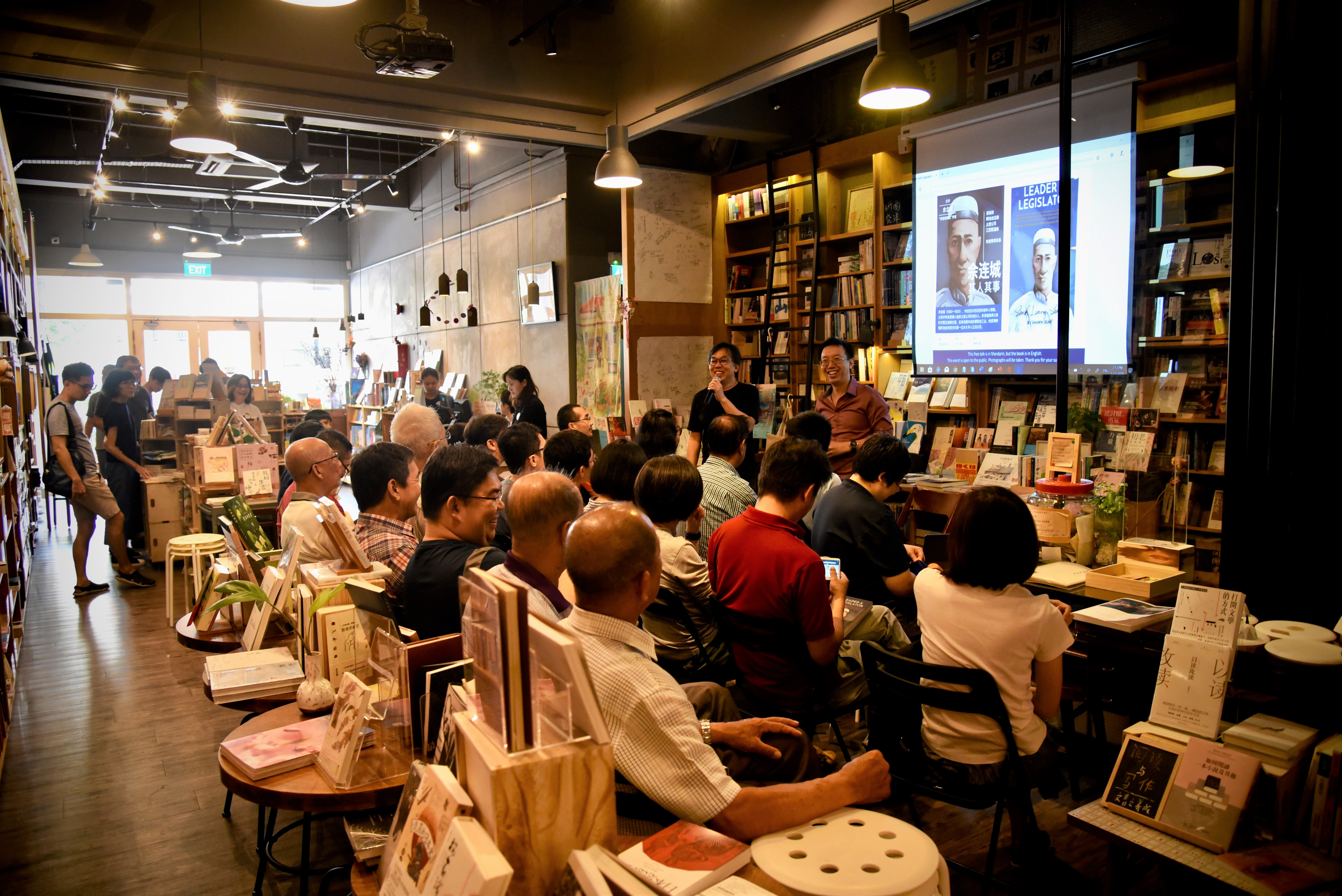
From 2023 onwards, writing and publishing books, promoting them at public events, and public engagement are back to face-to-face engagements. In the first half of 2023, I was privileged to have opportunities to speak at the Punggol Regional Library, the Asian Civilisations Museum along the beautiful Singapore River, and the Singapore Seah Clan Association.
Looking back on my arts journey during the pandemic, it’s amazing how far my team and I have come. It was not an easy journey, but I am glad that I have survived this challenging period. I’m grateful to all the people who have helped and supported me, and the wider community as well.
Thank you for reading.
Cheers,
Shawn Seah






You must be logged in to post a comment.