The people behind Red Dot Stories narrate stories of the quiet, often unseen contributions of ordinary Singaporeans, acts of kindness, resilience, and courage that strengthen our society and, in turn, our collective defence.
And they have released this amazing video featuring Karen Hoisington and Claire Koh talking about Elizabeth Choy: Singapore’s Kind Heroine (see YouTube and Instagram videos below)!
I am delighted to share that this video is based on my children’s book series, Our Amazing Heroes (2025), written by me and illustrated by the talented artist Patrick Yee.
The trailer was released earlier (see YouTube and Instagram videos below):
As a Singapore history author writing about Singapore pioneers, I support National Education and Total Defence. I believe that our unique Singapore stories help us understand who we are, what values define us, and what we must protect.
As we reflect on the importance of Total Defence Day (15 February), we must appreciate that Total Defence is more than just military readiness, which is important, but about social cohesion, economic resilience, digital and online responsibility, civil defence, and psychological strength.
In 2025, talented illustrator Patrick Yee and I launched our children’s book series Our Amazing Heroes to share stories of courage, compassion, and contribution by Singapore pioneers. This series was a sequel to Our Amazing Pioneers (2023), a children’s book series of Singapore’s pioneers, including Teochew pioneers Seah Eu Chin, Seah Liang Seah, and Tan Seng Poh, among many others.
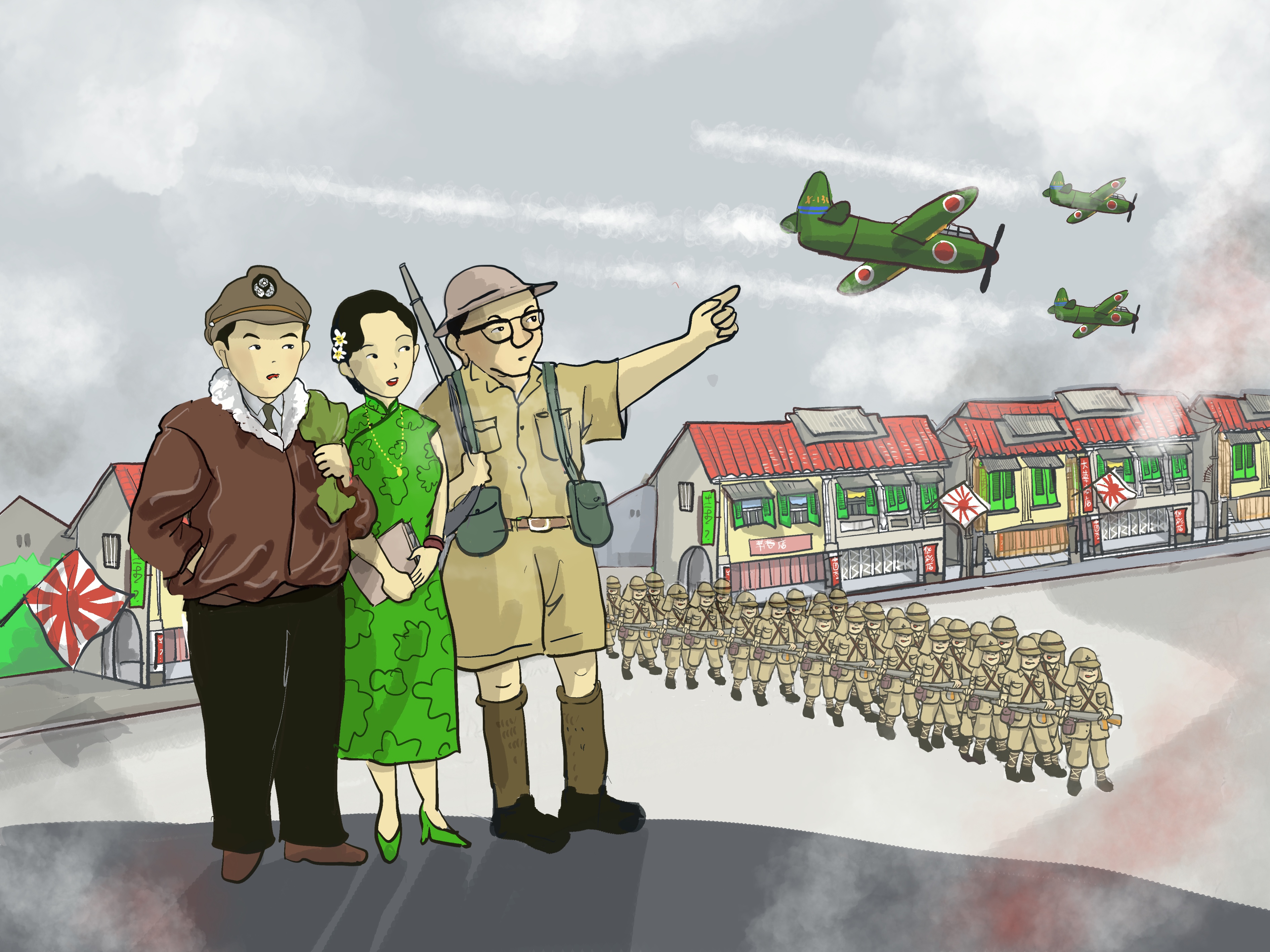
From left to right, Captain Ho Weng Toh; Mrs Elizabeth Choy; and Dr Ee Peng Liang depicted by illustrator Patrick Yee.
One of the historical figures Patrick and I brought to life through Our Amazing Heroes was Mrs Elizabeth Choy. As Singapore’s kind heroine, she demonstrated courage and compassion even in the darkest days of the Imperial Japanese occupation of Singapore.
In my children’s book Elizabeth Choy: Singapore’s Kind Heroine, I wrote about how she was arrested for smuggling supplies to prisoners of war, how she endured imprisonment and torture, and how she remained steadfast.
To mark Total Defence, such significant examples matter. They show our young that courage and compassion under pressure are real.
The team behind the video drew inspiration from the books and illustrations as part of their base material. I was genuinely encouraged to see how thoughtfully the values were brought across. The video brings out strong National Education and Total Defence themes for children in a way that is clear, accessible, and engaging.
As a Singapore history author and public speaker, this is what I believe in. I often tell pupils during school assembly talks that everyone has a role in keeping Singapore strong.
As we remember the importance of Total Defence, I hope this video encourages meaningful conversations. I hope it reminds our young Singaporeans that they are not bystanders in Singapore’s story, because every one of us has a part to play.
Thank you for reading.
Cheers, Shawn Seah
About the Author
Shawn Seah is a published author and public speaker who makes Singapore’s history come alive through engaging storytelling. He is the author of the children’s non-fiction series Our Amazing Pioneers (2023) and Our Amazing Heroes (2025), fully-illustrated books aimed at primary school pupils. He has also written non-fiction books for the general reader on Singapore family history, Teochew pioneers like Seah Eu Chin and Seah Liang Seah, and a Singapore Book Awards 2021 finalist My Father’s Kampung: A History of Aukang and Punggol. A recipient of the NUS Outstanding Young Alumni Award (2023), he speaks regularly about family history research, Singapore history, and the art of storytelling at schools, literary festivals, and museums.
I enjoyed myself at the Singapore Writers Festival 2025!
Here are some pictures from my day at The Arts House at The Old Parliament.
The Arts House at the Old Parliament, during the Singapore Writers Festival 2025! Photograph by author Shawn Seah. Author and speaker Shawn Seah at the Singapore Writers Festival 2025. Photograph by Shawn’s team. Behind the scenes: Brenda Yeoh, Shawn Seah, and Wesley Aroozoo getting ready for our Singapore Writers Festival 2025 panel. This photograph also reminds us of an age-old question: how many degree holders does it take to set up a laptop? Photograph by Shawn’s team.
As a history enthusiast, I am always excited to share about my family history, including my children’s non-fiction series Our Amazing Pioneers, which features many Singapore pioneers who have streets named after them, like Seah Eu Chin (Eu Chin Street), Seah Liang Seah (Liang Seah Street), and Tan Seng Poh (Seng Poh Road, Seng Poh Lane).
While admittedly it might sound somewhat self-indulgent, I felt pride and joy when I spoke to a full house of 75 attendees who packed the Screening Room at the Arts House, to listen to me talk about my family history books and my research!
On this exciting occasion, I was delighted and honoured to have distinguished Professors Victor Savage and Brenda Yeoh as my fellow panellists.
I found Victor to be a history and heritage buff, full of knowledge about Singapore’s history, which was unsurprising, but, above all, I personally found Brenda very kind, encouraging, and supportive.
(For example, during the panel discussion, Brenda helped to click through Victor’s slides, because he had so many of them, and somehow she got most of the order right! She was also so charming and friendly towards me.)
From left to right, Wesley Leon Aroozoo, Brenda Yeoh, Shawn Seah, and Victor Savage. Photograph by Shawn’s team.
Back when I was writing Seah Eu Chin: His Life and Times(first edition in 2017), I actually cited Savage and Yeoh’s books: Toponymics: A Study of Singapore Street Names and Singapore Street Names: A Study of Toponymics.
Their books on toponymics (the study of place names) provided a starting point for me to explore Singapore’s history through street names.
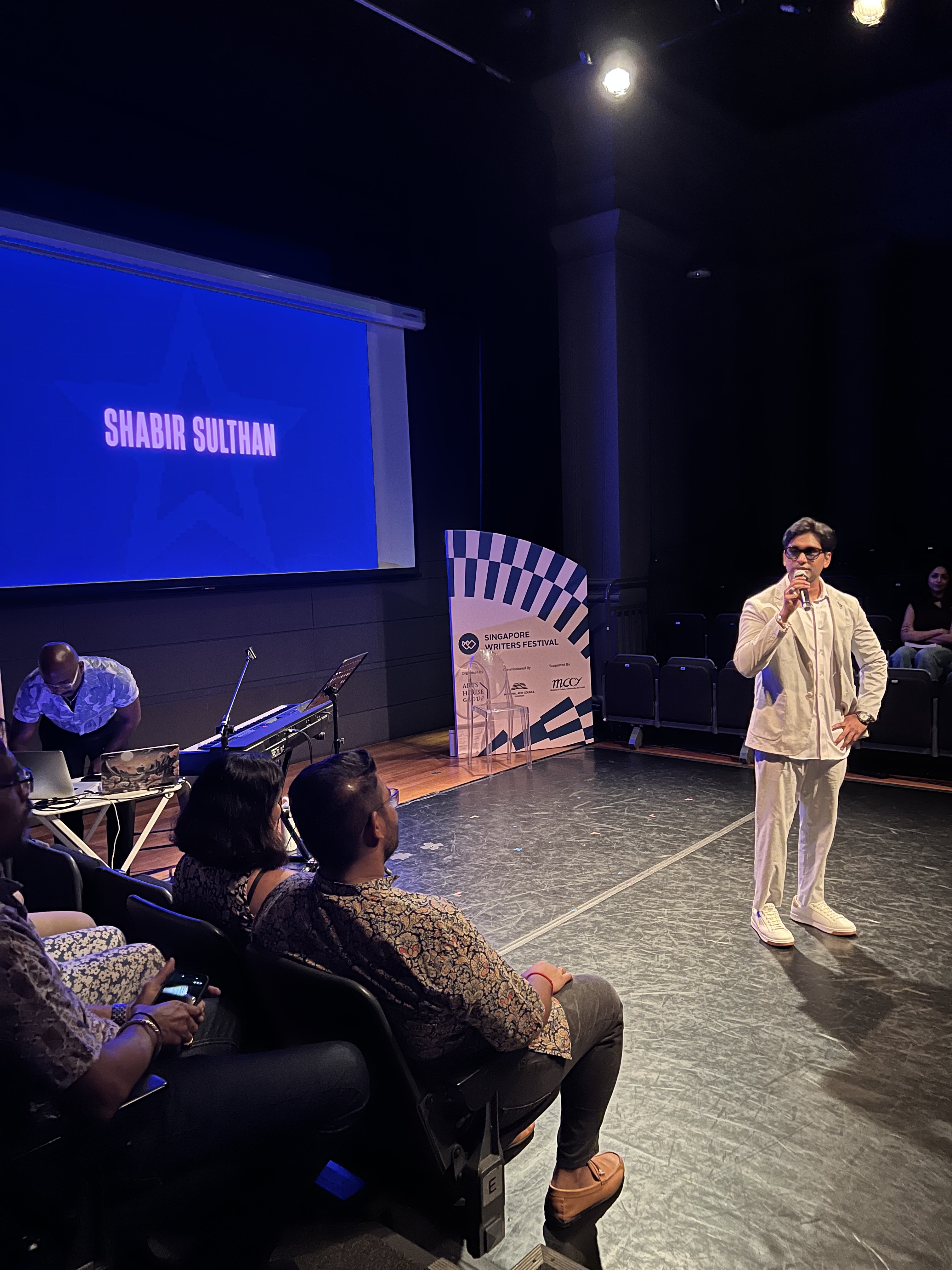
Other than my own panel discussion, I sat in for Shabir Sulthan’s performance lecture. I also enjoyed his session and learnt a lot, for example, of the importance of going regional or international as a content creator (he is big in India).
Shabir Sulthan performing and lecturing at the Singapore Writers Festival 2025. Photograph by author Shawn Seah.
Briefly, Shabir is a Singaporean composer and singer. Among his many musical achievements, he was one of the main singers for the 2021 National Day Parade (NDP) theme song, “The Road Ahead”. (Anyone who knows me know that I genuinely enjoy NDP songs.)
Through his stories and musical examples, like his composition of “Singai Naadu” (translated: “Singapore, my country”), he showed how melodies can be multicultural, carry our memories, and help us recognise the feelings we share as a people.
He shared that there was a sentiment in Singapore’s Indian community back in 2012: “Why was Munnaeru Vaalibaa the only Tamil NDP song?”
Shabir realised that older English-language NDP songs were of a certain style, generally upbeat and more action-oriented, aimed at building a new nation, and another common perception was that Indian songs had to come with the tabla and the sitar. However, he thought that Indian culture had so much more to offer.
He wanted to go for a more sentimental and emotional approach that went beyond traditional Indian music.
Although his song was not ready in time to be considered for the 2012 NDP, it was still played during the pre-parade segment, and also came to then-Prime Minister Mr Lee Hsien Loong’s attention that year.
Listening to Shabir’s perspectives (and his singing) not only opened my mind to different perspectives; it gave me an enjoyable experience at the Singapore Writers Festival.
Street names help us remember the amazing pioneers who built Singapore, while songs composed by Singaporeans like Shabir help us feel our connection to one another. Both are part of the larger Singapore Story and shape how we see our past and our future, “with hope, courage, and imagination”.
Thank you for reading!
Cheers, Shawn Seah
About the Author
Shawn Seah is a published author and public speaker who makes Singapore’s history come alive through engaging storytelling. He is the author of the children’s non-fiction series Our Amazing Pioneers and Our Amazing Heroes, and speaks regularly about family history, Singapore Stories, and the art of storytelling at schools, literary festivals, and museums.
I am delighted to be invited to the Singapore Writers Festival 2025!
As an author and public speaker, I am always excited to talk about my writing, including my children’s non-fiction series, Our Amazing Pioneers, where my books bring Singapore’s pioneers to life for young readers.
On Saturday, 15 November 2025, from 3.30pm to 4.30pm, at The Arts House at The Old Parliament, Screening Room, I will be speaking as part of a panel on the topic: “Name Dropping: The Legacy of Singapore’s Street Names”, moderated by Wesley Leon Aroozoo.
This topic is close to my heart.
I am delighted to have distinguished professors Victor Savage and Brenda Yeoh as my fellow panellists.
In fact, back when I was researching and writing my first book, Seah Eu Chin: His Life and Times, I actually cited Savage and Yeoh’s books: Toponymics: A Study of Singapore Street Names and Singapore Street Names: A Study of Toponymics.
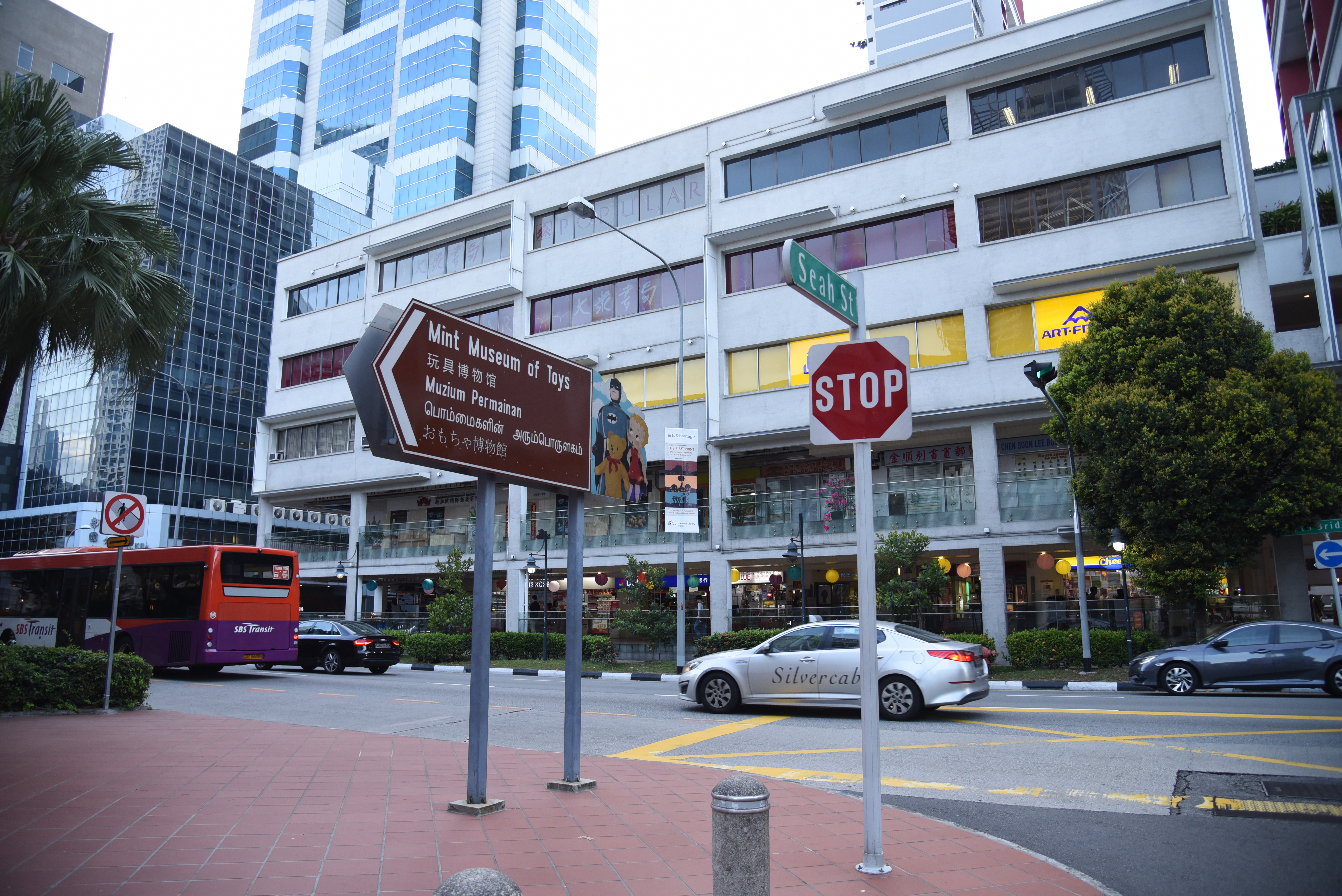
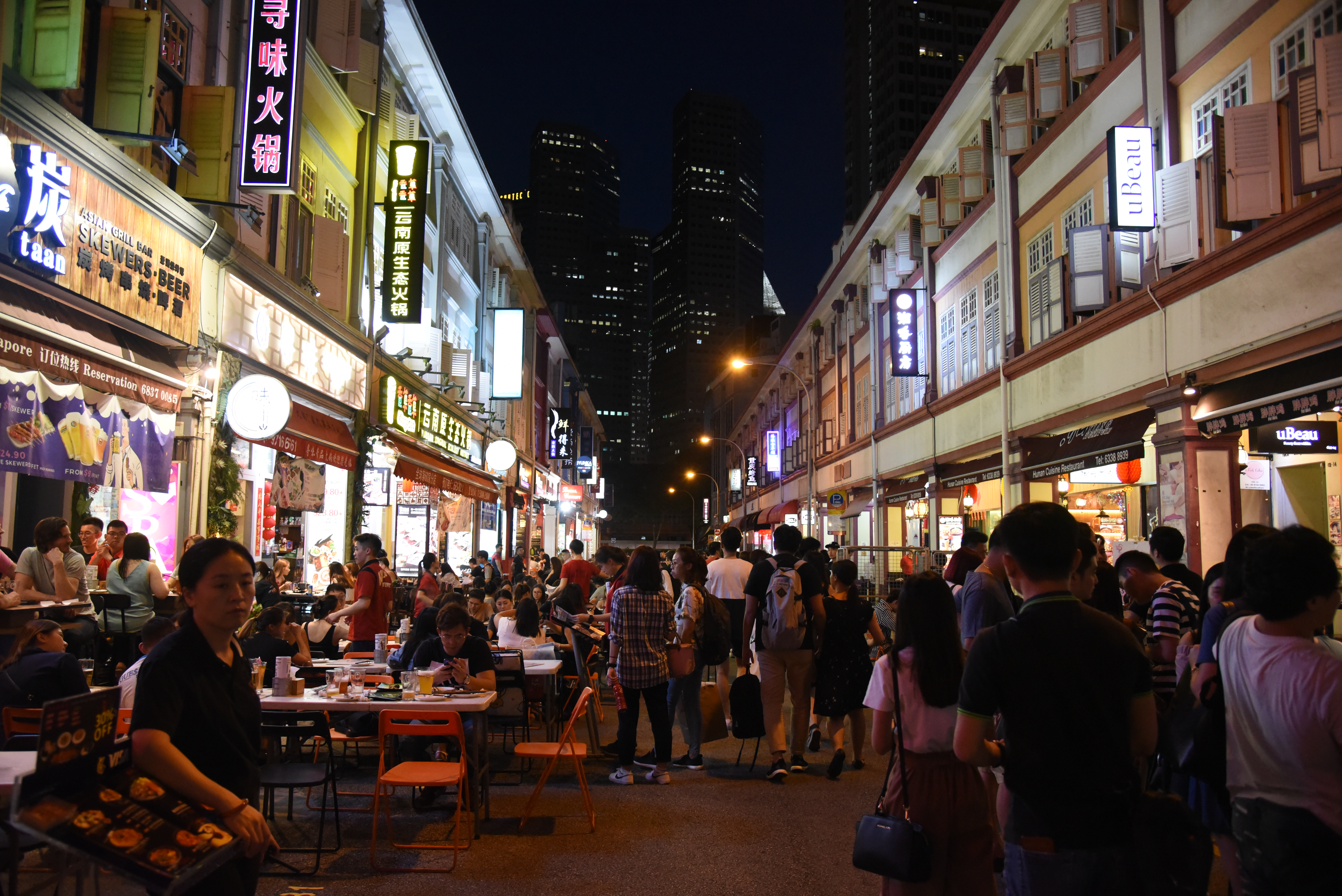
Seah Street in Singapore. For a blog post on the Mint Museum of Toys, please visit “History and Heritage: My Visit to the MINT Museum of Toys“. Photograph by author Shawn Seah.Liang Seah Street at night and on weekends is typically full of life. Photograph by author Shawn Seah.
They are experts in toponymics (the study of place names). Their books provided a starting point for me to explore Singapore’s history through street names. This is one reason why I’m looking forward to the panel discussion.
Also, the Singapore Writers Festival is one of Asia’s premier literary festivals, bringing together both international and Singapore authors to celebrate the art of storytelling and spark meaningful engagement with literature and the arts.
(In fact, I was a small part of the Singapore Writers Festival back in 2023. At the National Library’s Imagination Room, I narrated stories from Our Amazing Pioneers, covering Teochew leader Seah Eu Chin; Hakka heritage jeweller Ngeow Cher Seong; and charitable Arab Syed Omar Aljunied. Looking back, while the crowd was small, we had fun together!)
Author Shawn Seah was part of the Singapore Writers Festival 2023. Photograph by Shawn’s team.
This year’s festival theme, “Shape of Things to Come”, is bold and forward-looking, inviting us to reflect on the past and present, and envision the future with hope, courage, and imagination.
As Singapore marks 60 years of independence, the 2025 edition of the Singapore Writers Festival features a special SG60 Homage track.
After all, 2025 is a timely opportunity to explore how Singapore’s identity and heritage continue to evolve in a changing world shaped by new trends and technological advancements, like developments in generative Artificial Intelligence and Agentic AI.
During my panel, I will share from my own writing journey, including the children’s non-fiction series Our Amazing Heroes and Our Amazing Pioneers, and my explorations into the stories of pioneers remembered through our street names.
These include our amazing pioneers remembered through streets such as Eu Chin Street, Seng Poh Road, Seng Poh Lane, Liang Seah Street, and Seah Street.
Many other pioneers I wrote about, like Syed Omar Aljunied, Edwin Tessensohn, and Naraina Pillai, also had streets named after them.
It is a privilege to be part of this conversation at Singapore Writers Festival 2025, as we look ahead with optimism while honouring the stories and histories that have shaped us.
I believe that community support for local writers is vital, and festivals like this remind us of the importance of coming together to celebrate our shared stories.
I warmly invite you to join us at the Singapore Writers Festival 2025 to listen, reflect, and be part of this conversation.
Thank you for reading.
Cheers, Shawn
About the Author
Shawn Seah is a published author and public speaker who makes Singapore’s history come alive through engaging storytelling. He is the author of the children’s non-fiction series Our Amazing Pioneers and Our Amazing Heroes, and speaks regularly about family history, Singapore Stories, and the art of storytelling at schools, literary festivals, and museums.
“You’re definitely known in Singapore, especially for your family history writing, but I wonder about your reach beyond Singapore. Does anyone outside of Singapore even know about your writing or who the h*** you are?” (Friend’s identity has been hidden to ‘protect the innocent’.)
Well, it was a frank and fair question.
And it was a question that kept popping up in my mind.
Author and speaker Shawn Seah at the Asian Festival of Children’s Content 2025, with illustrator David Liew. Photograph by Shawn’s team.
This question reminded me of guidance I received while at the Asian Festival of Children’s Content in May 2025. It went something along these lines:
“While you are recognised for writing non-fiction stories for Singaporeans, there might be value in giving some thought to writing something that lends itself more readily to regionalisation and internationalisation. That would mean translations, more products, and ultimately greater reach.”
From a publishing perspective, this is actually good, sound advice.
And I have taken this guidance to heart.
However, upon reflection, actually my writing on Singapore has already reached several audiences beyond Singapore over the years. It’s true that these are niche audiences rather than broader, larger groups, but I have definitely reached some people in Malaysia, China, and the United Kingdom.
And naturally, I can and should do more to ensure that my writing reaches a broader, more international audience.
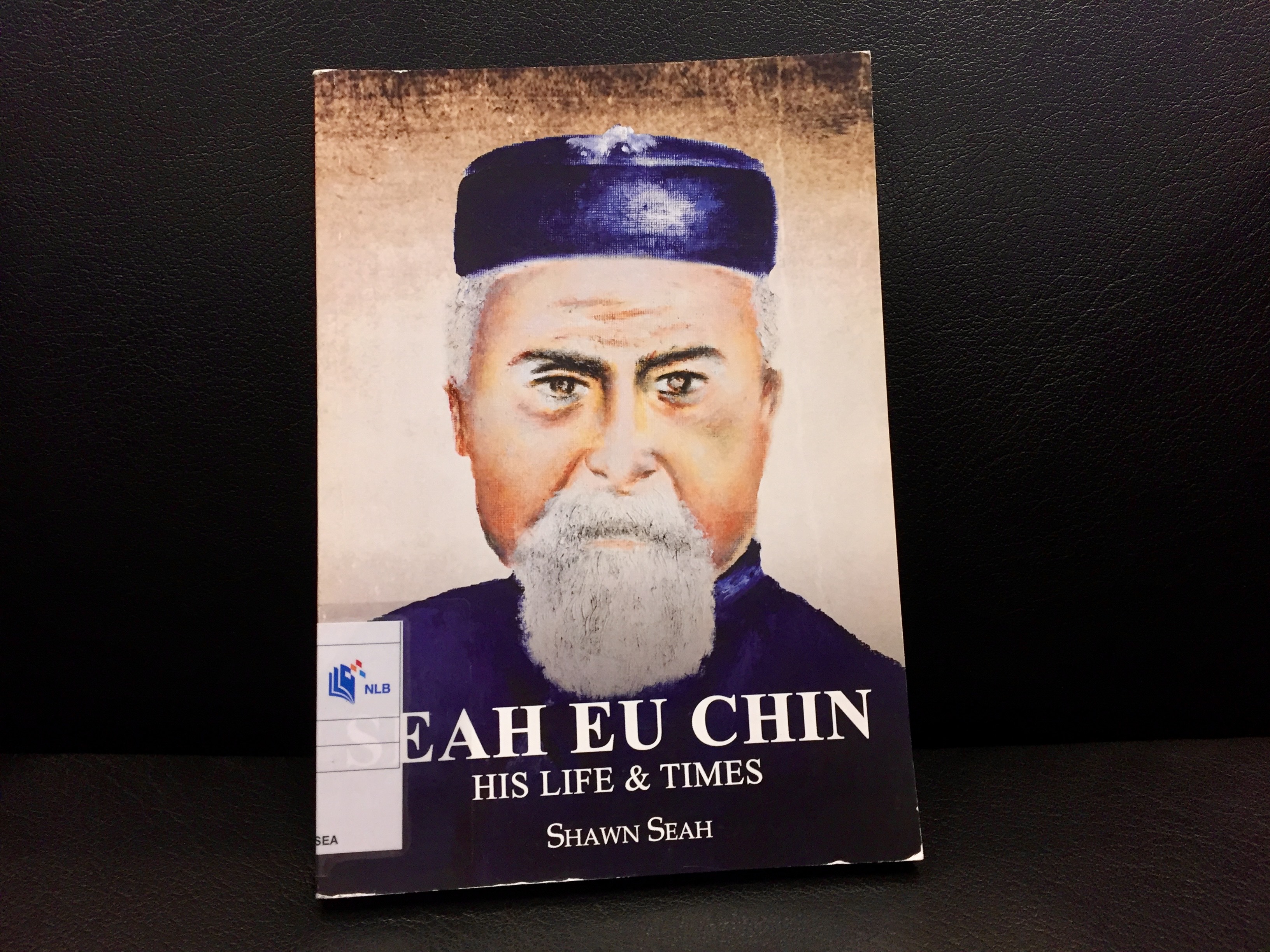
One early and unintended milestone came with my first book, Seah Eu Chin: His Life & Times (1st edition, 2017).
A copy of the first edition of Seah Eu Chin: His Life and Times. This first edition is out of print, so this photograph was taken at a library. Photograph by author Shawn Seah.
Although it was my first book and my maiden attempt, this self-published book took on a life of its own and crossed Singapore’s border into Malaysia.
(I was writing figuratively: the books were brought across the border by a kind person called Mr Ng.)
As far as I am aware, the now limited first edition book is currently available for sale only at the Johor Bahru Chinese Heritage Museum, located at 42 Jalan Ibrahim, Johor Bahru, Malaysia.
Seah Eu Chin: His Life & Times (2nd Edition, 2019) was subsequently translated into Mandarin, to reach out to Chinese-language audiences.
Cover of the Chinese translation of Seah Eu Chin: His Life & Times. World Scientific Publishing Company.
This translation has helped introduce Singapore history to some readers in China, creating opportunities for greater cross-cultural understanding and historical appreciation.
I recall one night, several years ago, a lady who shared the same surname as me came to collect copies of this Chinese translation from me, and as far as I understood her Mandarin, the books would be shared with our clanspeople in Yuepu village in China.
My writing has also been featured, referenced, and mentioned in overseas Chinese media platforms, including Sin Chew Daily (星洲网), a Malaysian Chinese-language newspaper; Sohu.com (搜狐网), a Chinese news and media portal headquartered in Beijing; and Guancha (观察者网), a Shanghai-based online news and aggregator site.
In Malaysia, content creator Denise Lee featured my work in her thoughtful article, “Preserving History with Shawn Seah”, published on 1 September 2020 in THEMISSNISE. She reflected on the importance of history and how stories of pioneers like my ancestor Seah Eu Chin continue to shape the way we understand identity and community today. I was very grateful for her generous feature.
In fact, my book on Seah Eu Chin went beyond Asia. I was delighted when UK-based historian Stan Neal cited my research in his chapter, “Mediators, migrants and memories of colonial Singapore: the life and legacy of Seah Eu Chin”. This chapter appears in Singapore – Two Hundred Years of the Lion City (Oxford: Routledge, 2020), edited by Anthony Webster and Nicholas J. White.
Being explicitly referenced and mentioned in a scholarly publication alongside respected historians has been amazing.
These experiences remind me that heritage storytelling has international reach.
One broader point I’d like to make is that Singaporean writers who write exclusively about Singapore should not feel that their work is any less important than the work of people who write for a broader, wider readership.
Whether in the pages of a Chinese-language newspaper, a British academic text, or a heritage museum in Malaysia, Singapore’s stories can still spark interest, invite reflection, and build bridges across borders.
To fellow writers wondering whether your words will travel: keep going.
The world may be open to reading your stories and learning more.
I enjoyed moderating a panel discussion called “Fact Attack! Making Non-Fiction Fun and Fascinating” at SCBF 2025!
It was an honour to take part in the SCBF for the first time, during its second edition.
The whole idea of my panel was that non-fiction books did not have to be dry and dull. As I personally believe in edutaining children and making history come alive, I readily agreed to be part of the panel.
From left to right, Ng Yi-Sheng, Shawn Seah, and David Liew during a panel discussion. Photograph by Shawn’s team.
My fellow panellists were award-winning author Ng Yi-Sheng and talented illustrator and crafter David Liew (according to him, sometimes confused with award-winning children’s book author David Seow).
And Yi-Sheng even brought Mr Monyet along, a monkey puppet. I hasten to add that this was the first time I had ever had a puppet attend any of my talks.
The three of us (and the monkey) talked about our love of history; the uses of humour; writing on problematic parts of history for children, like opium and war; parents’ concerns on how facts were portrayed; the limits of artistic licence; how facts ought to be conveyed to children; as well as how to scope stories to young children.
From left to right, Mr Monyet (the monkey puppet), Ng Yi-Sheng, David Liew, and Shawn Seah at the SCBF 2025. Photograph by Shawn’s team.
It was really an engaging experience!
Being part of a festival dedicated to books for children feels amazing, just like when I was speaking at the Asian Festival of Children’s Content (AFCC). I appreciated the fact that SCBF 2025 was more than just a celebration of fiction, but non-fiction children’s books as well, just like AFCC 2025.
I have actually moderated many panels over the years, like a panel during the Baba Nyonya Literary Festival 2022 and the NTUC Career Festival 2025. But this one was easily the funniest and most humorous panel I have had the privilege of moderating.
I was glad that we shared laughter, learning, and maybe a little inspiration with our audience too.
Thank you to the Singapore Book Publishers Association and Nanyang Academy of Fine Arts, University of the Arts Singapore, the organisers of the SCBF, for inviting me to be part of this amazing festival. And I look forward to being called back again!
On 24 May 2025, I had the privilege of speaking at the Asian Festival of Children’s Content (AFCC) for the first time!
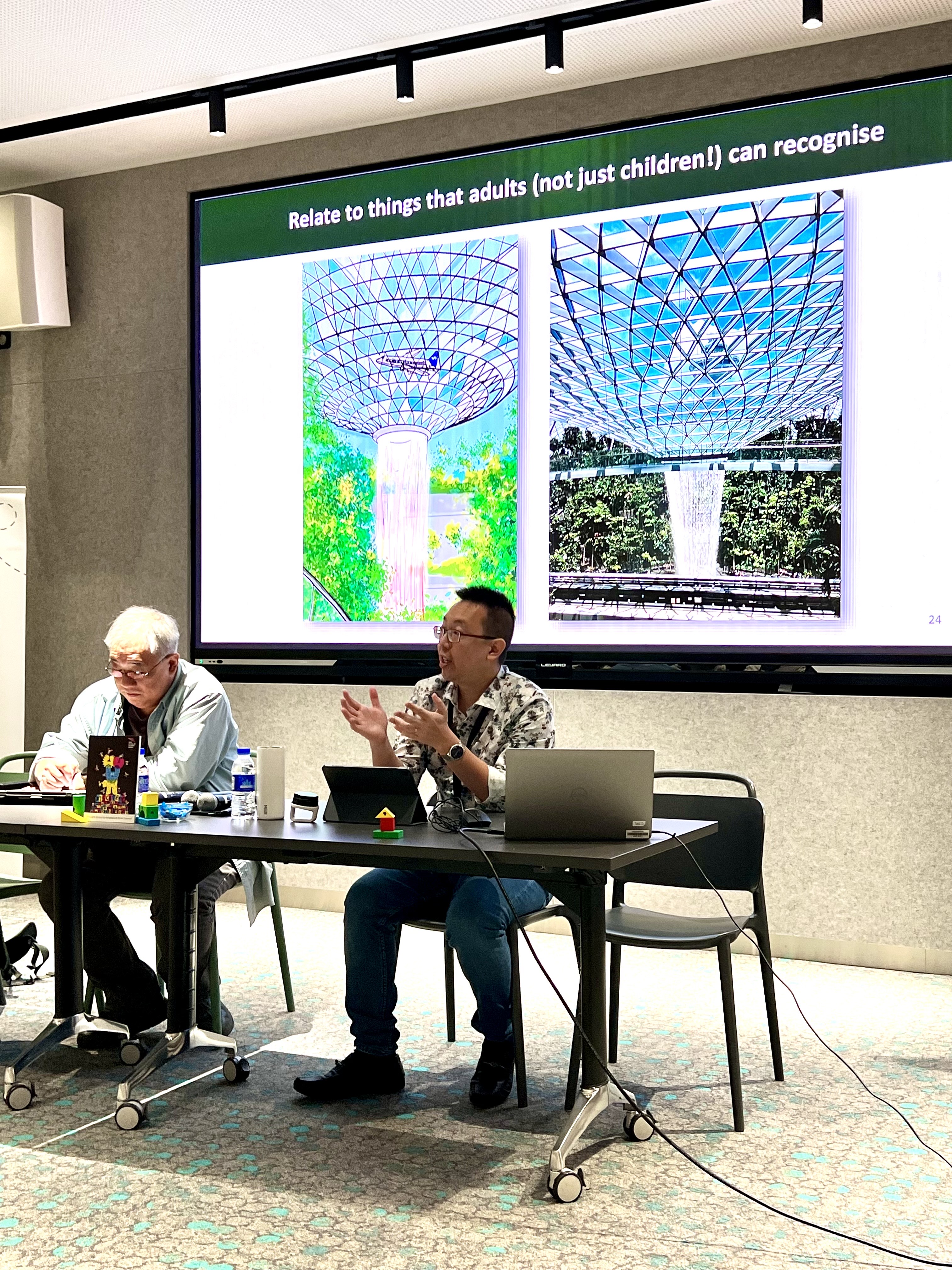
My session, “Discovering Singapore’s History: Adapting War Narratives into Meaningful and Engaging Children’s Stories,” focused on how educators, docents, and content creators can help the young connect with war narratives or World War II stories.
Question and Answer (Q&A) at Shawn Seah’s talk at AFCC 2025. Photograph by writer’s team.
It was a joy to share the stage with prominent illustrator David Liew, who moderated the session with warmth.
Despite our age gap, I discovered that David and I had many things in common: we are former educators, we have many friends in common, and we share a passion for history.
During my talk, I shared about the broad historical context as well as introduced my children’s book series, Our Amazing Heroes.
The year 2025 is special for Singapore and Singaporeans.
It marks Singapore’s 60th year of independence (or SG60).
It also marks 60 years of the Singapore Armed Forces (or SAF60).
And it is also the 80th anniversary of the end of World War II.
That is why this year, in particular, is especially timely to reflect on Singapore’s history.
And this is the background as to why I launched my children’s book series Our Amazing Heroes this year.
I shared about the importance of dramatic scenes and illustrations, grabbing children’s and adults’ attention.
However, war stories for children should not just be about war. I spoke about the importance of focusing on inspiring stories that convey important values, like courage, compassion, and resilience.
I also talked about keeping stories relatable and relevant, and above all how I connected various stories to each other through what I called a “Marvel Cinematic Universe” approach towards episodic storytelling.
After my talk, we had a very enjoyable and engaging Question and Answer session where the attendees asked insightful and interesting questions. I had a lot of fun exchanging views!
David Liew and Shawn Seah at AFCC 2025. Photograph by writer’s team.
Beyond my talk, AFCC was a chance to explore the rich world of children’s literature. I attended a thought-provoking session by Lianne Ong and Kenneth Heng on writing about social issues like rough sleeping.
The talk was an important reminder that children’s books can (and should) tackle tough topics with care and empathy, especially in the age of the Internet.
I also visited the Book Illustrators Gallery, which was quite curiously located at Bras Basah Complex, near the National Library. I am guessing that this was probably a sign that space is always a premium for book events in Singapore! It was also great catching up with artist and designer Derrick Tham there.
Author and speaker Shawn Seah holding up copies of Our Amazing Pioneers at the AFCC 2025 Festival Bookstore: Closetful of Books. Photograph by writer’s team.
And of course, it was definitely a joy to see Our Amazing Pioneers available for sale at the festival bookshop. It was a good reminder of how far I have come along my writing journey.
AFCC 2025 was a wonderful experience of learning, sharing ideas, and connecting with others who believe in the power of stories to spark curiosity and inspire change.
I’m grateful for the warm conversations, the kind support from many people, and the shared commitment to making a difference through books.
Author and speaker Shawn Seah standing in front of the AFCC 2025 logo. Photograph by writer’s team.
I hope I will be invited for the next festival and be able to continue telling stories that matter.
I’m delighted to share that I will be speaking at the upcoming Asian Festival of Children’s Content (AFCC) 2025!
This is my first time being a part of this festival, so I am really excited and looking forward to it.
I will just do my best.
Organised by the Singapore Book Council, the AFCC is the leading literary festival in Asia for children’s stories and young adult literature.
Aimed at authors, illustrators, translators, publishers, educators, and media professionals, the festival offers a range of programmes, including panel discussions, presentations, workshops, masterclasses, and networking sessions that promote children’s stories and young adult literature with a focus on Asian themes.
This year, the 16th edition of the AFCC will take place from 22 to 25 May 2025 as an in-person event at the Singapore National Library.
My speaking slot will be on Saturday, 24 May 2025, 10.30am to 11.30am.
Historical storytelling, especially on topics like war heroes, is sometimes seen as difficult to adapt for younger audiences.
However, these stories help children discover their country’s history, introducing them to darker times and the heroes who arose to overcome the odds and shape the present.
By appreciating these narratives, children can imbibe enduring values like courage, compassion, and contributing to society, and hopefully feel inspired by those who made a difference in trying times.
In my talk, I will be sharing the approaches that I have taken in my children’s book series, Our Amazing Heroes, towards translating these complex topics into engaging and accessible stories for children.
I will share what I consider some of the best practices in historical storytelling and creating dramatic action to engage children, balancing between excitement and maintaining gravity.
I also share about how we might best use illustrations to accompany text and give weight to words. The talented artist, Patrick Yee, helped to bring my visions to life.
And I also share about how writers might be able to weave in values and virtues into the stories.
I will also be touching on utilising episodic storytelling, akin to the Marvel Cinematic Universe, from my prequel series Our Amazing Pioneers.
This “historical cinematic universe” that I have created can help to make history appealing, relatable, and convey challenging messages.
Other Interesting Nuggets
One interesting nugget is that the AFCC also has a long-standing partnership with the Puttnam School of Film & Animation (LASALLE College of the Arts) for a content adaptation challenge. I am not revealing any spoilers here, but AFCC is collaborating with them on something exciting. And as one of the featured authors, I am definitely looking forward to seeing the eventual outcome at the festival grounds!
Another featured author at the AFCC 2025 is the award-winning author, Lianne Ong! In all my interactions with her, she has been most kind and encouraging (once, she even gave me guidance on how to write children’s books and told me about the importance of social media).
Another interesting titbit is that there might be many South Korean attendees this year. After all, as this year marks 50 years of diplomatic relations between Singapore and South Korea, the AFCC 2025 features South Korea as the Country of Focus!
However, and I really do sincerely apologise, the AFCC is a ticketed event (unfortunately, it is not a free public event). Discounts are available for students and seniors.
Starting your journey to become an author is both exciting and challenging. However, the journey is also full of challenges. I have made so many mistakes in writing, editing, self-publishing, and mainstream publishing. But I have also learnt from them.
Here are some key lessons and reflections every aspiring author should know before starting on their writing or publishing journey.
I hope my lessons and reflections (from hard experience) will be useful to you.
No one can actually guarantee a smooth journey, but if you are reading this, at least you can be properly informed before you make any decisions.
“Our Amazing Pioneers” series of books on pioneers like Seah Eu Chin, Tan Tock Seng, and Syed Omar Aljunied. Photograph by writer’s team.
First, don’t expect to make a fortune
Don’t be too quick to quit your day job once you start writing.
There are millions of books published each year (both through mainstream and self-publishing routes). In fact, most books do not sell more than a few hundred copies.
What this means is that statistically speaking, not every book you publish will be a bestseller (if you even publish a bestseller at all).
Not every book idea is going to be sheer genius.
As a result, the harsh reality is that few authors make significant money from their books.
Even if there is money to be made, it will not come from the books themselves, but from other sources, like additional programmes you deliver.
Trust me, I hate to be the one to tell you this hard truth, especially since I love writing, but I think it’s important to be realistic about the financial aspects.
If you don’t expect to make a fortune, and you eventually do, you will be pleasantly surprised.
Second, aim to be a professional
Treat your writing seriously, setting aside dedicated time and striving for high-quality work.
Yes, inspiration is important, but so is perspiration.
Writing is a skill that needs dedicated, committed, continuous practice.
Keep writing, reading, and learning.
Even the best writers keep improving upon their craft.
Third, be prepared to polish relentlessly
No one creates a perfect masterpiece on their first try (or even their seventh try; trust me).
Be prepared to edit your work many, many times. Edit your writing, take breaks, and come back with fresh eyes, and have an editor review it.
(An editor can help you with many aspects beyond copyediting and proofreading; an editor is more than someone who just fixes typos, spelling errors, and grammatical mistakes. However, at the end of the day, you still have to be able to edit your own writing.)
Polish your writing: remove redundancies; tighten up; keep sentences and paragraphs readable; correct spelling mistakes and typos; and check facts and figures. Relentless editing is crucial for creating a polished final product.
But I have to confess: no matter how hard you scrub, one or two mistakes will always get through. Pay special attention to figures: dates, numbers, financials. Despite my economics training, sometimes figures get mixed up.
Live and learn, as I always say. Be prepared to forgive yourself over and over again.
Fourth, understand yourself and your unique perspective
Ask yourself what makes you uniquely qualified to write this particular book. Why you?
Consider your personal experiences, educational qualifications, or background that make you the right person to write this book.
Your unique perspective is what will set your book apart from others’ books.
Fifth, distinguish your book(s) from comparable titles
On the one hand, your book needs to be similar enough to existing titles so that publishers know there is a market or existing demand for it.
On the other hand, it cannot be too similar, as it needs to stand out from the crowd, being a bit differentiated.
Think about what unique angle, data, or insight you can offer that others haven’t, and make sure this is clear in your book or book series.
Sixth, have a regular, consistent writing schedule
One of the biggest challenges facing any writer is maintaining a regular writing schedule.
Waiting for the “perfect moment to write” or for “inspiration to strike” often leads to procrastination.
Yes, it sounds a bit like work, but being professional means treating writing as work: hard work! As Denzel Washington rightly said, “Hard work works.”
Set up a routine that works for you.
Set achievable goals, like writing a certain number of words each day or week.
I often set myself modest goals, like “at least one sentence per night” or “at least one paragraph on weekend nights”.
Seventh, criticism will come. Deal with it
I think the biggest shock I received was how some people can be incredibly rude and unkind, but I have learnt to deal with it over the years.
(BUT I immediately hasten to add that the vast majority of readers I have come in contact with are kind, encouraging, and supportive people.)
Rude rats are real. I personally have been called “sh*t” in Hokkien; falsely accused of stealing other people’s ideas (they were not published, but I was); and heckled at book talks.
Sometimes, the funniest part of these criticisms is that the person has not even read the books in question and is just making unjustified ad hominem attacks.
Par for the course: criticism is an inevitable part of the writing journey.
Not everyone will love your work, and that’s OK.
Develop a thick skin and learn to deal with criticism constructively.
Where relevant, use criticism or constructive feedback to improve your writing, rather than being discouraged.
However, if it is irrelevant criticism or unconstructive feedback, then ignore the naysayers.
Remember, even the most successful authors face criticism. When you put yourself out there, there will be the occasional rude and unkind person. Learn to forgive them and yourself.
Eighth, understand the publishing landscape: traditional, mainstream publishing vs. self-publishing
The publishing industry offers several ways to bring your work to readers.
Traditional publishing provides credibility, editorial support, and marketing and distribution resources.
Self-publishing offers control and potentially higher royalties, and gives you the opportunity to handle everything from editing to marketing.
Ninth, build or strengthen your platform
Build an author platform to reach audiences and engage with readers. If you have an existing one, continue to strengthen it.
What is a platform? It is essentially like “street cred”, credibility, or expertise; existing popularity; and connection with your readership. How do you reach out to readers? How do your readers reach out to you? And how big is your support group, your fan base, your community?
Use social media, create a professional website, or start a blog to share your journey and connect with your audience.
Network with other writers, participate in literary events, and connect with many people.
For example, when I first started along my writing journey, it was difficult to reach out to readers in the beginning. I had to build my mailing list one email at a time, and network with people and make connections, one person at a time. Slowly, but surely, over many public talks, I have gradually built up and strengthened my platform.
Today, things are much easier now that I have a mailing list of kind people who are supportive of my writing. And I still keep growing my influence and community, bit by bit.
Build your platform.
Tenth, stay resilient: don’t give up
In any major undertaking, you will face challenges. That’s normal.
Rejection is an inevitable part of the writing journey. That’s normal too.
Feeling alone in the writing journey and wanting to give up is also normal.
And like I mentioned earlier, there will be all sorts of critics (you can count on it).
Not every publisher will be interested in your manuscript; not every editor will love your book proposal; and not every reader will love your work.
My word of advice: don’t give up.
Keep learning, growing, and writing.
Really, don’t give up easily
Keep your passion alive.
Write stories that matter to you.
Remember why you started writing in the first place and let passion drive you forward. But temper your passion with hard truths and realistic expectations.
The journey to becoming an author is filled with ups and downs, moments of self-doubt, and triumphs. But you can get better and better over time.
After reading about my personal experiences and lessons, at least you are better prepared to go on your own journey and experiences.
All the best and keep writing! May you contribute to positive change in the world, even if it is in your own, small way.
Thank you for reading.
Cheers, Shawn Seah
(The original story was first posted on my Medium blog on 1 June 2024. This story was reposted here and updated on 2 June 2024.)





 Shawn Seah Li Song
You must be logged in to post a comment.